Enpuku-ji is a Rinzai Zen practice centre located in a
lively neighbourhood of Montreal. The centre
provides a daily schedule of Zen practice in the style
and spirit of the teaching of Kyōzan Jōshū Sasaki,
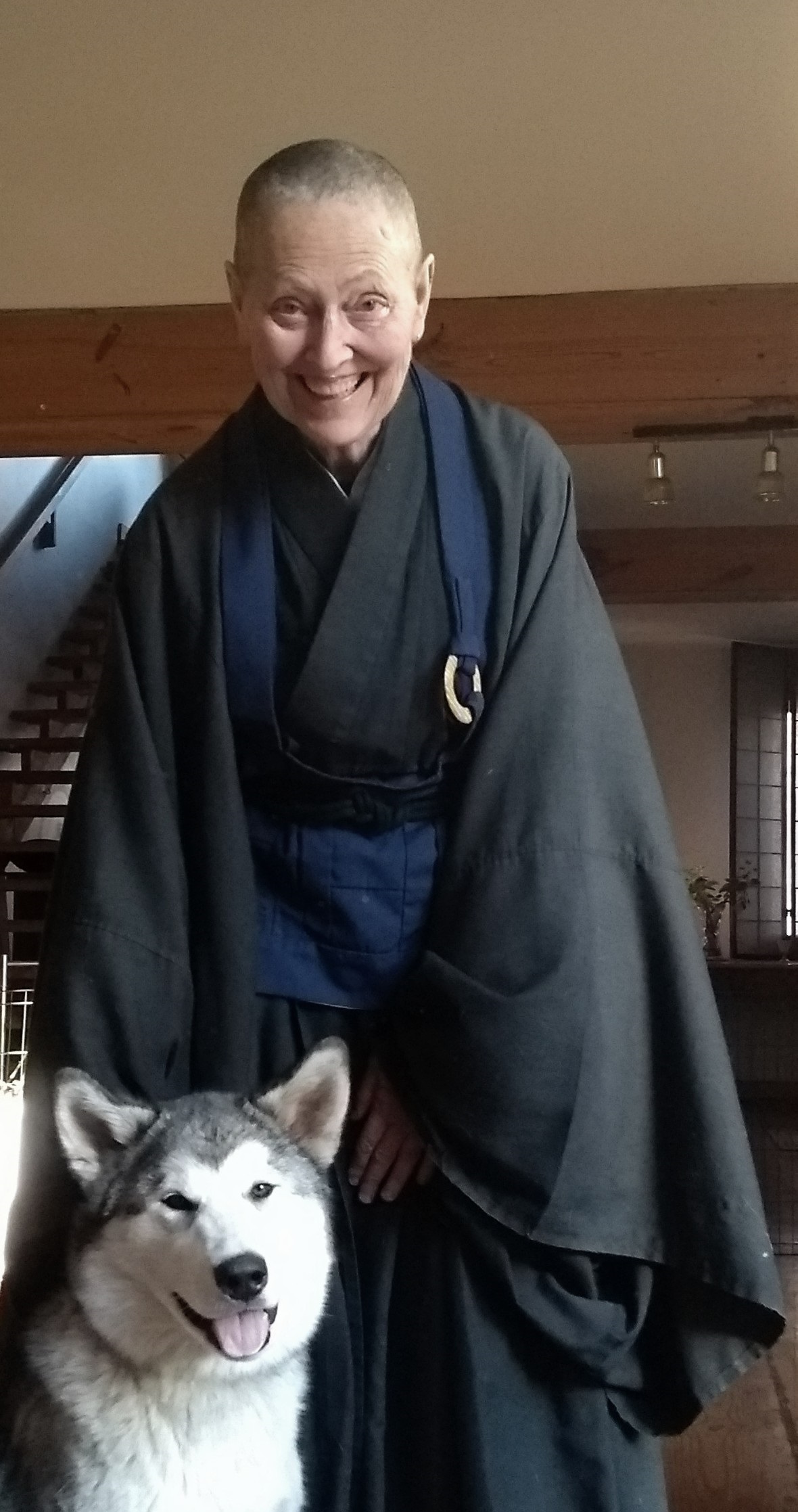
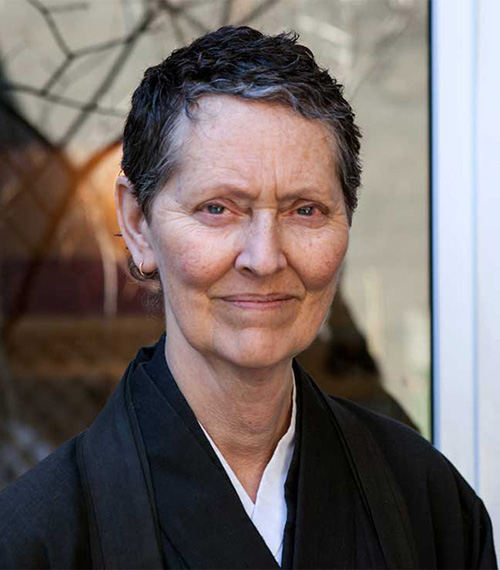
Rōshi. The resident monk and abbot is Zengetsu
Myōkyō. In addition to the regular zazen schedule, the
Zen Centre offers one-day retreats, five-day sesshins,
Buddha ceremonies and personal ceremonies such as
weddings and memorials.
Myōkyō began her training with Jōshū Rōshi in 1980
and moved to Mt. Baldy in 1985. She was ordained
as a Zen monk in 1986 at Mt. Baldy Zen Center, and
practiced at Mt. Baldy and Rinzai-ji Zen Centers in
California and Bodhi Manda and Albuquerque Zen
Centers in New Mexico before returning to Canada
in 1995. She was ordained as a Zen Osho (Priest)
in 1999, receiving the religious name Zengetsu, and
continued to study with Jōshū Rōshi until his death
in July, 2014. In Montreal, Myōkyō is involved with
the larger Buddhist community. She served as Associate Buddhist
Chaplain at Concordia University and at McGill
University for two decades.
HISTORY
Centre Zen de la Main was founded in 1995 by Myōkyō, with the help of
generous donors. In 2009, its name was changed to Enpuku-ji with the move to its
new location at 4620 Saint-Dominique Street. Enpuku-ji is the temple name which was given to
Myōkyō by her teacher. The meaning of the kanji for Enpuku-ji is Temple of Full Prosperity.
Enpuku-ji is an affiliate centre of Rinzai-ji in Los Angeles, the motherhouse of a network of
centres which are committed to practicing Rinzai Zen as was taught by Kyōzan Jōshū Sasaki,
Rōshi. It has grown in its first decades to the point of being able to provide a strong
and consistent practice environment for members, newcomers, lay monks and practice residents.
We aspire to create an inclusive environment at Enpuku-ji for any person who wishes to engage in Zen practice. We aim to affirm and respect our differences as well as our similarities in religion,
gender, age, race and ethnicity, sexual orientation, political belief, physical ability and appearance.
SCHEDULE
In-Person
Tuesday and Thursday
6:00 AM - 7:30 AM
Monday, Wednesday and Friday
6:00 PM - 7:30 PM
Saturday
9:30 AM - 11:00 AM+ Nitten soji
Online (Zoom)
Monday, Wednesday and Friday
6:00 AM - 7:00 AM
Tuesday and Thursday
6:00 AM - 7:30 AM
Monday, Wednesday and Friday
6:00 PM - 7:30 PM
Saturday
9:30 AM - 11:00 AM
Dharma Talk
A dharma talk is occasionally offered during the Saturday morning zazen session and is part of retreat schedules.
Zazenkai
Zazenkai (one-day silent retreats) are held on a Sunday. The schedule includes
sutra chanting,
formal meal, nitten soji, dharma talk, meeting with Myōkyō, and
zazen. Participants are expected to be familiar with the practice
etiquette. Part-time participation is possible, although preference is
given to those attending full-time.
All people new to Enpuku-ji, regardless of their practice background,
are asked to attend a newcomers session.
ZEN BUDDHISM
Why practice Zen?
“The real Zen practice is to realize that you have the
center of gravity of the universe. When you realize
that you have the center of gravity which is one with
the center of gravity of the universe, then you unify
the world and you are unified by the world. You are
embraced by the world. When you unify the world
and you are unified by the world, that center of
gravity is only one. So you cannot call it your own
center of gravity. That center of gravity doesn’t
need to call itself “self,” because there is no object.
Since it unifies the world. There is no object. It is
very difficult to understand, so you need more zazen
to experience it.”
- Kyōzan Jōshū Sasaki, Rōshi
Excerpt from Buddha is the Center of Gravity
Those interested in formal Zen practice are asked to attend an
instruction session in order to join the regular zazen schedule. The
instruction session is usually held on the second Saturday of each month from
12:00pm to 1:30pm. The session outlines the form and etiquette of
practice, as well as a brief history of the Centre and Jōshū Rōshi.
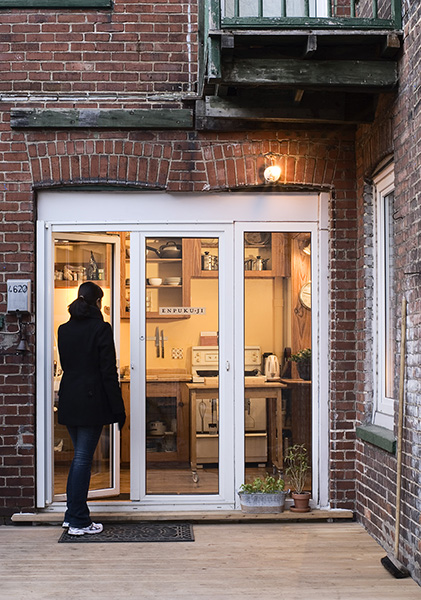
The main entrance for Enpuku-ji is in the garden. Follow the path to the
left of the parking area and go through the gate to the deck doors with the Enpuku-ji logo.
News
Welcome, 2026
So, we arrive at the end of a year that sometimes felt like a lifetime and sometimes like a single frame in a film.
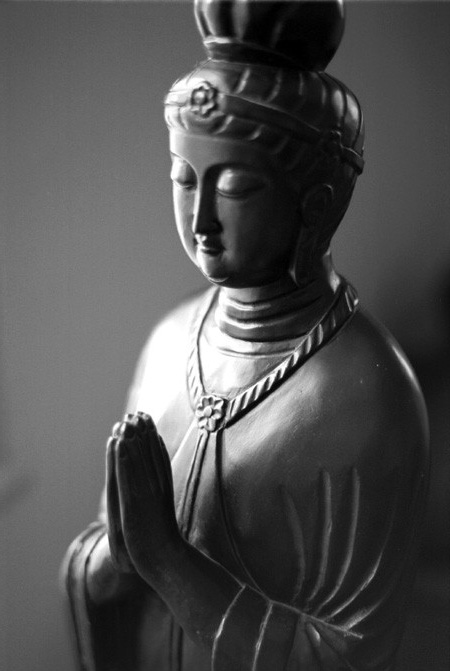
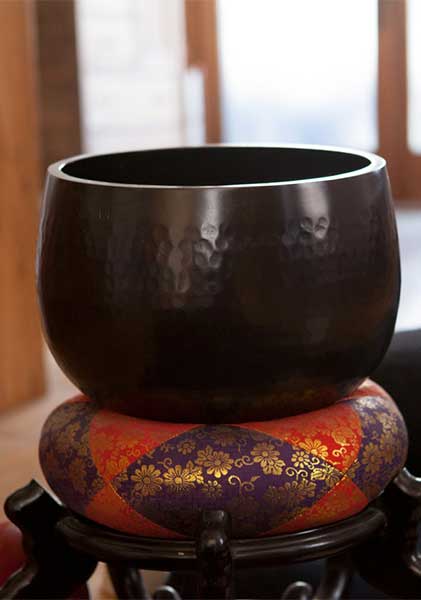
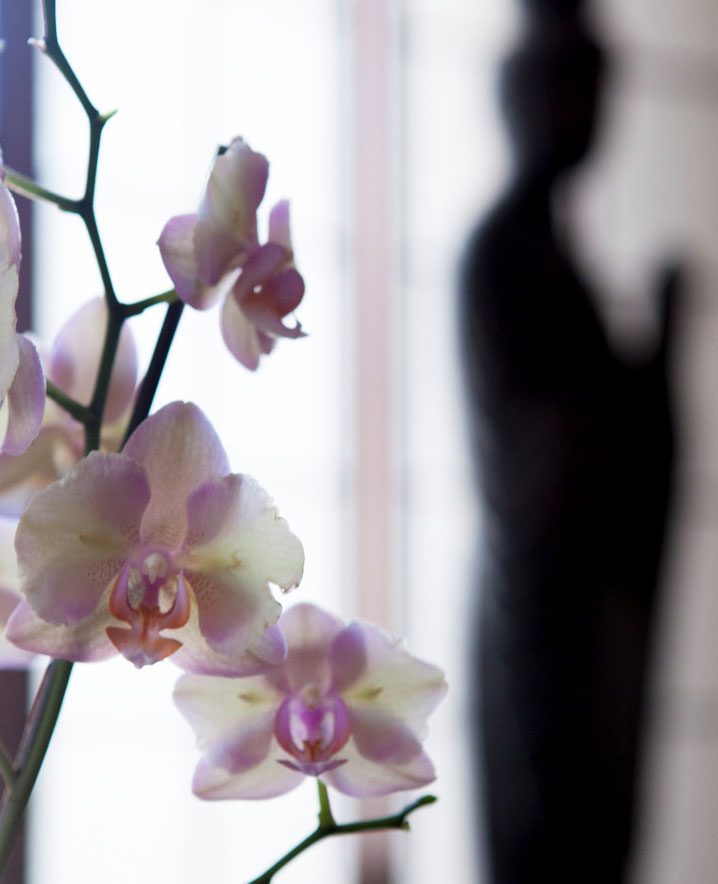
These past twelve months, thanks to a generous donor, saw the zendo become simpler and more beautiful with the Kwan Yin alcove, a fresh shoji screen for the butsudan, and some butsudan accoutrements, along with a mokugyo and very sonorous gong (keisu) from another generous donor.
We have re-established a choka (morning chanting) practice for our Thursday morning practice and look forward to choka on Tuesday mornings as well in the new year.
Our wonderful wood artisan will undertake an addition to the butsudan table to create a closed-in box-style butsudan, and, so, we have modified the placement of the tan (cushion platform) to add another seat to the tanto side.
One project for 2026 is to obtain a larger keisu (one of the set of two keisu used for daily chanting and ceremonies) from Japan. If you would care to contribute to this addition to the zendo, please contribute via the CanadaHelps link, with a note re keisu purchase.
https://www.canadahelps.org/en/charities/enpuku-jicentre-zen-de-la-main/
In 2025, we reinstated regular zazenkais and, in a few days, will hold our first sesshin since the COVID-19 pandemic began in early 2020. A new experience, the "Bringing to the Moment" ceremony/meditation was instituted in October as an annual event for remembering those we have lost and those in deep struggle.
A Buddhist ceremony, one of "putting to the fire" things - photographs/documents/momentos/furniture/books - that we wish to not be rehomed, will take place this coming summer in the countryside.
We would like to extend a special invitation for you to attend, either in person or online, our New Year's Eve programme - zazen and toast to 2026 - on Wednesday, from to EST. Please email if you would like to join online and we will send you the Zoom link.
There is much appreciation for all of you who have contributed in these last thirty years of the Zen Centre's existence with general donations, membership donations, gifts-in-kind, and volunteer help with projects and maintenance. The Enpuku-ji Board members look forward to your continued support for this upcoming year and the next twenty-nine!
Nine bows,
Myōkyō, Abbot
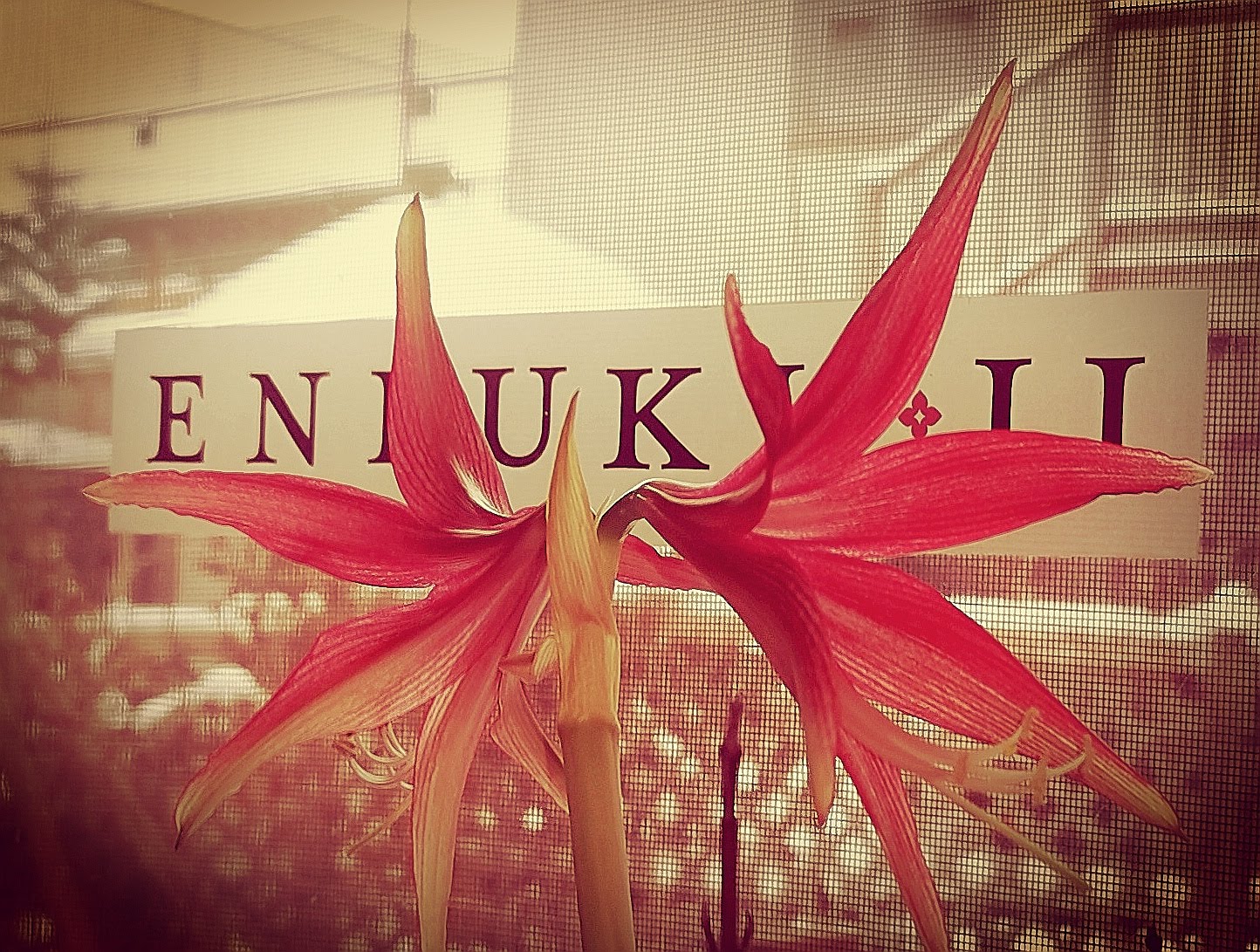
New Year Amaryllis
A reminder
The Zen Centre continues to keep its doors open and a zazen schedule
in place because of your monthly contributions. Please do make that
donation, after your newcomers session, through
the
CanadaHelps link.
COMMUNITY
Lay Monks
Seiun Thomas Henderson, autism and education specialist, was an integral part of Enpuku-ji for a decade, assisting Myōkyō with all of the programs/events
that the Zen Centre offers, until he moved to Colombia in early 2023. Seiun has built a zendo on his farm and has established a weekly zazen group in the small city of Pereira.
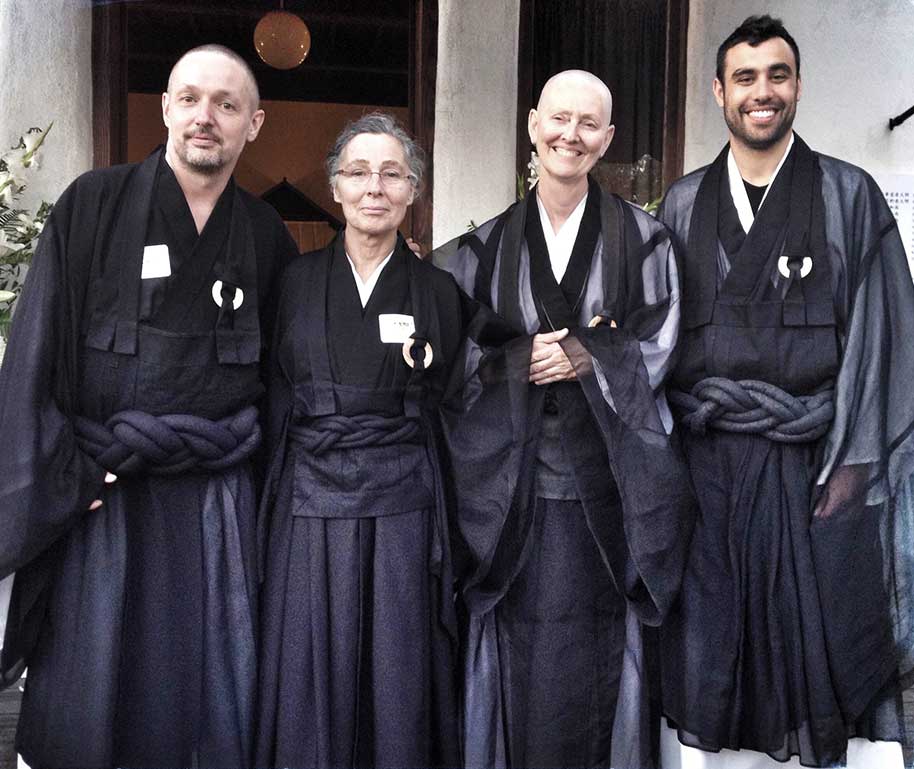
Ekyō Diane Poissant, retired administrator and educator, lives in
Kingston, Ontario. She established a zendo, Ryokusui-an, in her home
in 2013, where a regular schedule of zazen is offered.
Jion Ned Shepard, DJ, producer, musician and remixer, was a regular
practitioner at Enpuku-ji for eight years before moving to
Los Angeles, CA in 2012. He created a beautiful zendo in his
Beverly Hills home for which Myōkyō bestowed the name, Kattō-an - Hermitage of Entangling Vines. Jion lends invaluable support to Rinzai-ji, Myōkyō's motherhouse, in LA.
The tokudo-shiki (ordination) ceremony for Seiun and Jion was held at Enpuku-ji in January, 2011 and that for Ekyō at Ryokusui-an in October, 2013.
Volunteers
Volunteers and the understanding of dana have always been
important aspects of the Zen Centre. Dana is considered to
be the Buddhist practice of cultivating generosity, or some
might say, selfless spontaneous giving.
Enpuku-ji has always had much help from members
and from friends of the Zen Centre, those who do not
come to practice but want to support the existence and
future of Enpuku-ji. We have help with the garden, the
current Zen Centre dog, Listen, house maintenance,
snow-shovelling, the website,
translation, and so on. Most of this help
goes unnoticed by others but is essential to the spirit and
stewardship of Enpuku-ji.
Montreal Zen Poetry Festival
The Montreal Zen Poetry Festival was conceived of by several
young poets who were practitioners at the Zen Centre
around 2005. We held three festivals – 2007, 2009 and
2011. We have
been fortunate to have hosted the likes of Jane Hirshfield,
Robert Bringhurst, Red Pine, Steve Sanfield, David Budbill,
Peter Levitt, Chase Twichell, Kaz Tanahashi and others. The
Montreal Zen Poetry Festival, a small niche festival,
led to rich collaborations with McGill University and with the
Blue Metropolis Montreal International Literary Festival over
the years.
Enpuku-ji published two collections of the works of our 2007
and 2009 invitees under the imprint of Enpuku-ji Press. The
collections, "Forget the Words" and "Words have no Meaning",
are available for purchase at the Zen Centre.
The Rumi Li Zen Poetry Library, housed on the second
floor at Enpuku-ji, has a special collection of Zen poetry and haiku
works. People
are invited to sit and read, by appointment.
An offshoot of the Festivals has been the acquisition by
Myōkyō and a former resident practitioner and Festival
volunteer, Ian Sullivan Cant, of a small letterpress.
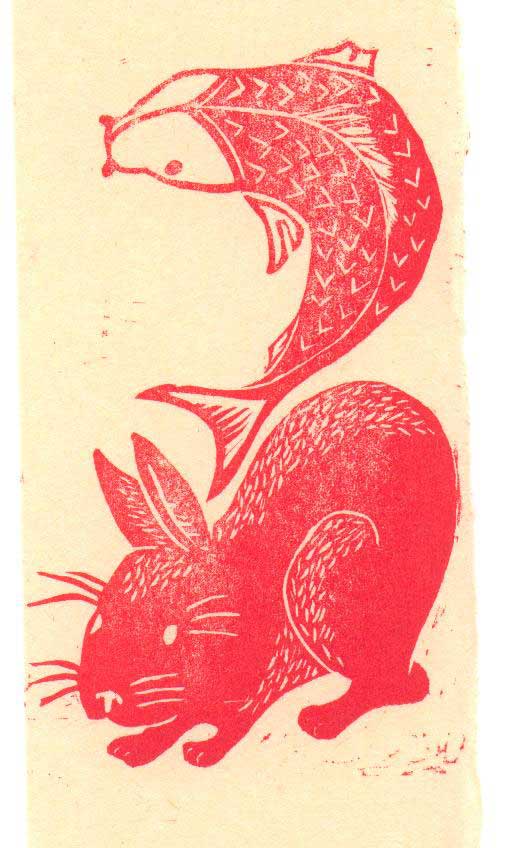
The
rabbit fish logo, for the 2009 festival, was created by Ian
who is a very fine zine artist and illustrator.
GIVING & MEMBERSHIP
Enpuku-ji is incorporated under Federal law as a charitable
organization and, as such, issues tax receipts for donations and
membership payments via CanadaHelps. The Centre is supported by general donations,
membership payments, retreat and ceremony fees, resident and
guest practitioner income and donations to the Abbot, Membership, General Donations, Practice Scholarship and Temple Maintenance Funds.
Those attending regularly
are asked to contribute as a member after
their newcomers session.
Donations and membership payments are payable online through
CanadaHelps.
To make such a payment via CanadaHelps,
simply click on the “Contribute” button on this page. A screen with
the Enpuku-ji logo will appear. Then choose "Donate Monthly" for a
membership payment and follow the instructions. If you wish to make
a single donation, click on "Donate Now" and, on the next screen,
after entering the amount, go to “Fund/Designation” and choose
which fund you would like to contribute to. CanadaHelps allows
donors to download a tax receipt at any time.
Payments other than donations and membership payments are not
tax-receiptable and are made by Interac e-transfer to [email protected].
Your support of Enpuku-ji is greatly appreciated, and will help to ensure its future as an urban centre dedicated to contemplative Zen practice.
No one will be excluded from practicing at the Zen Centre because of inability
to pay. It is possible to make alternate arrangements involving work at the Zen Centre and/or in-kind contributions.
Enpuku-ji Zen Centre is located on the traditional territory of the Kanien’kehà:ka (Mohawk),
a place which has long served as a site of meeting and exchange amongst many First Nations including the Kanien’kehá:ka of the Haudenosaunee Confederacy, Huron/Wendat, Abenaki, and Anishinaabeg.


 New Year Amaryllis